
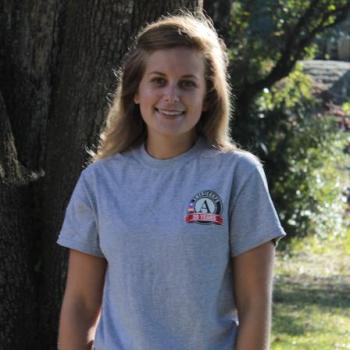
Jennie Proto
Hometown: Norfolk, MA
Educational Background: Bachelor of Arts in Anthropology and Public Health Studies from Elon University
Host Site: Florida Department of Health at Baker County
What is your role at your host site?
My position as a Health Educator aims to educate, inform, and empower Baker County residents to make positive health decisions. I will be teaching classes in the middle and high schools revolving around drug and alcohol use, violence, and tobacco cessation classes for youth given citations for underage tobacco use. Additionally, I will be teaching dental hygiene to elementary school students. With these classes, I will be evaluating their success. On another note, I will be tracking A1C levels of diabetic clients and serving the individuals to assure success.
Why did you join AmeriCorps/National Health Corps?
I joined AmeriCorps/National Health Corps because I am interested in becoming involved in public health programming. I am very interested in how communities can utilize the resources they have already to improve health outcomes.
What are you hoping to gain from your year of service?
I am hoping to gain more skills in designing, implementing, and evaluating programming for a wide variety of populations in need. Primarily, I look forward to improving in my role as a facilitator. I am excited about my position because it will challenge me in this way and teach me a lot about myself and others.
What are your plans after AmeriCorps service?
I will likely enter the workforce after my term of service and, within the next year or two, enter graduate school for public health and/or nutrition.
Where do you envision yourself in 5 years?
My passion truly lies within maternal and child health, specifically in breastfeeding, as a major measure of preventing poor health outcomes for mothers and children. I see myself being involved here in the United States, perhaps through the Special Supplemental Nutrition Program for Women, Infants, and Children and abroad in developing countries where breastfeeding rates are dangerously low through an organization such as Save the Children or UNICEF.