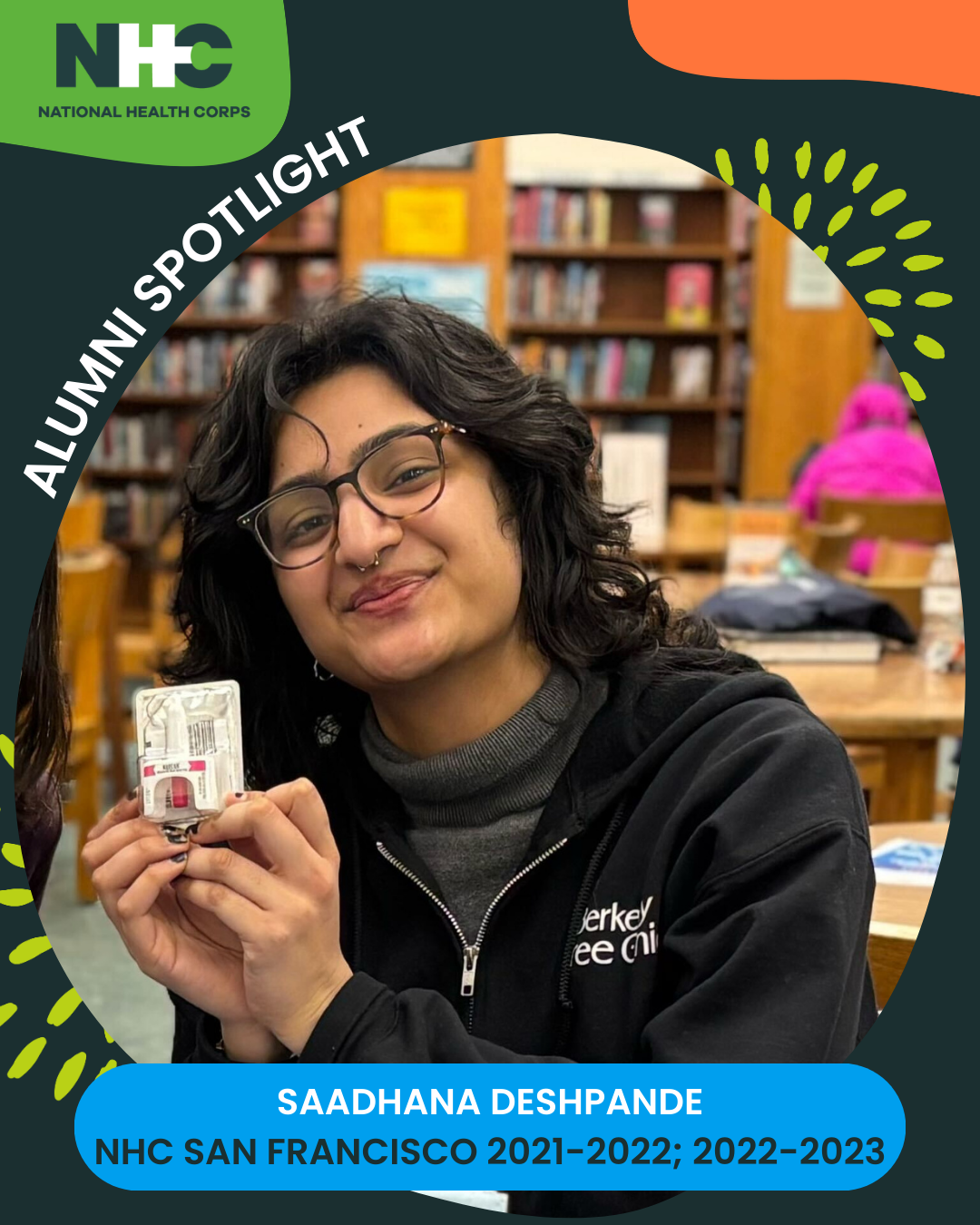
Alumni Spotlight: Meet Saadhana Deshpande, NHC 2021-2022; 2022-2023 Alum!
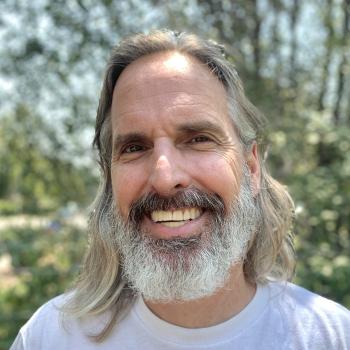
Jeffrey is a 2025–2026 National Health Corps member with NHC San Francisco, serving at the San Francisco Department of Public Health's Whole-Person Integrated Care Team as a Permanent Housing Advanced Clinical Services (PHACS) Care and Capacity Coordinator.
As part of NHC San Francisco’s Alumni Spotlight series, Jeffrey connected with Saadhana Deshpande to discuss their shared experience at the Berkeley Free Clinic, followed by Saadhana's journey through NHC, SFDPH, and finally into Drexel University College of Medicine. Saadhana was a part of the 2021-2022 NHC Service Term and served with the San Francisco Health Network's Food As Medicine Collaborative as a COVID-19 Responder/Food Access Coordinator, and returned to continue their role during the 2022-2023 Service Term.
During Saadhana's service terms, they focused on sustaining and expanding access to food pharmacies throughout San Francisco to reduce food insecurity while supporting the Department of Public Health's Case Investigation and Contact Tracing (CICT) efforts to mitigate and/or treat the spread of COVID-19 during the height of the pandemic.
Read on to learn how Saadhana’s NHC experience continues to shape their approach to medicine.
Jeffrey: You’re the reason that I joined the National Health Corps, so it makes sense for me to ask: What led you to the NHC?
Saadhana: When I graduated from my undergrad, I really didn't know what exactly I wanted to do. This was in the first year or so of the COVID-19 pandemic. I really had no idea what sorts of job opportunities I had, but I knew that I needed a job.
I was applying left and right to different research positions, and applying to food systems positions, because my degree was in Nutritional Science, and I had double-minored in Public Policy and Food Systems.
I didn’t know if I wanted to do AmeriCorps, because I wasn't sure if there was a specific position that combined my interests in a way that felt really good to me. A position that immediately connected all of my educational experience, advocacy background, and everything into something that would really fulfill me.
I had actually been hearing from vendors in the food systems space to apply to FoodCorps; also, to apply to Teach For America, with my background in teaching.
Jeffrey: You ultimately signed on as Food Access Coordinator with the San Francisco Health Network. Can you tell me what interested you about the Food Pharmacy program?
Saadhana: I saw this specific Food As Medicine Collaborative position where you could coordinate this program called Food Pharmacy.
It involved equal access for all patients, it involved sustainable agriculture and procurement of organic produce, and it also involved medicine, connecting patients to healthcare providers, building relationships, and developing a food program in a community clinic-based setting. I immediately thought, “Oh, this is interesting. I can definitely let my experience and background play into this role.”
I'd started volunteering at the Berkeley Free Clinic in March of 2020, right when the pandemic hit. That’s where I learned that I really like working in a community clinic, so I knew I wanted to do something related to community health. I was interested in dietetics, public health, and also possibly nursing at some point, too.
So I applied for the position, and when they interviewed me, they were like, “Wow, your background makes you a perfect fit for us. It’s everything that we want to see: You have an advocacy background, you're interested in food systems, you very clearly want [food access for all], and are willing to fight for it. This is a great position for you.”
I decided to just move forward with the position and see what happened. And I really loved it. There are so many moments where I would be sitting in the clinic and talking to patients, putting together grocery bags, making recipes, where I was just like, “I was meant to do this; everything has led me to this moment.”
Jeffrey: You’ve [participated in] National Health Corps not once, but twice. What motivated you to sign up for the second year?
Saadhana: There was one specific moment that made me do a second year, and that was when a patient came up to me when I was nearing the end of my first service term, and told me, “Man, you guys are like visitors—you come and go.” That was upsetting to hear, but I couldn’t help but think about how that was technically true.
And I thought, “This is unacceptable. This is disrespectful to the community for people to be cycling in and out of these positions, when there’s supposed to be some continuity between the programs and who is staffing the experience.”
It's not trauma-informed to have things set up like this. It does feel like we're visitors. I'm not from San Francisco, though I’m from the Bay. I don't know these stories and this history, as the people here do. So why don't we build a better system for people to be hired and to be in these positions? That made a lot more sense to me.
By the end of my second service term, I was able to help onboard some of the health workers to be doing Food Pharmacy, and that felt amazing. Basically, the reason why I did a second year was that I felt the community deserved better. I also really respected and looked up to some of the people I worked with at FAMC, including Zoë Womack and Erin Franey–those two are absolute superstars, and I intuitively felt that I had more to learn from them during a second service term.
Jeffrey: We volunteered together at the Berkeley Free Clinic, so I always knew about your interest in mutual aid, community initiatives, affinity spaces, things like that. Then you went to medical school. Can you explain what went into your decision?
Saadhana: Good question. Before deciding on medicine, I had definitely thought about and explored other potential options. For me, my decision came about because I was looking really critically at the healthcare space, looking for the people with the ability to best advocate for their patients.
Working in the [San Francisco] Department of Public Health, especially in my position as a Health Worker, those who had the most power to advocate and to command attention were the doctors. In a lot of the meetings that I was in, heads would be turned when someone was like, “Oh, we have a physician here from San Francisco City Clinic,” or the physician here, you know, who's consulting on something from the San Francisco AIDS Foundation.
And it made me realize that that sort of institutional authority would only come with the title of a physician, which was initially a frustrating thing for me to grapple with. But then I also realized that, I think one of the reasons why that's the case is because physicians get to build such strong relationships with their patients, and have to practice medicine for so long to get that experience.
And so I think especially after getting inspired by one of the physicians I worked with during Food Pharmacy, I was like, “let’s really try this.” It was a long process to apply to medical school, but I applied, and I got down here [to Drexel]. Medical school is not easy, but I’m having a great time, especially because I get to live in Philadelphia, which is a really wonderful city.
The communities here are definitely different, but the challenges that they face parallel what I’ve seen in my home of the Bay. My background in community health has also proven very useful here: for example, as a part of our Health Advocacy Practicum, I’ve been placed with the Center for Addiction Medicine and Policy. Our main role is to go out into the community and teach people about naloxone and opioid overdose prevention. I wouldn’t feel so confident doing that if it weren’t for my experience as a Health Worker at SFDPH, where I worked with an incredible mentor, Emily Valadao, to deliver naloxone trainings in San Francisco. And I wouldn’t have received that offer without my time in the National Health Corps. Just tracing my path, it really started with the Berkeley Free Clinic and NHC, and now I’m here!
One thing I've been wondering about is: how can physicians be better champions? Can they be better communicators, be better at leading a team of people? Like, those are all things that I'm really interested in doing, too, and I think that being a physician will help me get better at them.
But I think if I weren't doing this, I'd probably be getting my PhD in Food [Systems].
Jeffrey: I think you’ll make a great doctor, but I also think you’re one of those people who will never lose their commitment to the communities you serve. How do you see yourself managing a career in modern healthcare, while still leaving time and space to fight the good fight?
Saadhana: There was a doctor with the DPH at the community clinic I worked at. She was working in the community clinics three times a week, and on the other days of the week, she was building a community access plan for DPH.
That's amazing. I want to work like that. That's cool. You're in the community three times a week, and you’re able to take the perspectives of the community into the systems-building work you do. Sure, you're spending the other two days doing a lot of admin-heavy work, but you’re also building new structures that prioritize health access for all. Doing that, and also directly caring for her patients, just really amazed me. That's the kind of work I want to do. That would be ideal for me.
And if it weren't that, then I would probably want to work in a community setting during the work week and volunteer at a free clinic in my free time. Free clinics are a space where a lot of vulnerable folks are and will continue to be cared for, but they're also spaces that are not historically well-supported. So we need more healthcare providers to be showing up and using their expertise and skills to care for those populations.
Regardless of what ends up happening, I really hope that I can volunteer at a free clinic, or at a community clinic, or even a food pantry or community garden. My goal is to pour back into the spaces that have sustained my community and me for so long.
About the Author