Humans of NHC: Jennifer White, RDN
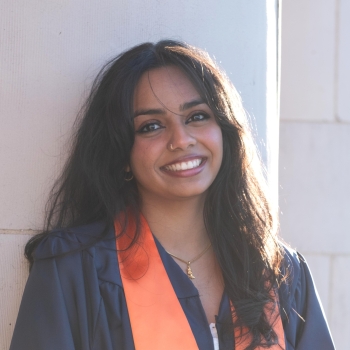
Hi! My name is Alekhya Rajasekaran (she/her), and I serve with the Central California National Health Corps as a Food Security Program Assistant at Harmony Health Medical Clinic. Through this role, I’ve gained a hands-on understanding of the vital role FQHCs (Federally Qualified Health Centers) play in uplifting historically marginalized communities, especially within the medically underserved agricultural regions of Central California, like the Yuba-Sutter counties. I’m excited to continue advancing nutrition education and food policy initiatives that help bring care closer to the vibrant communities that need it most.
Throughout my service term, I’ve had the opportunity to work alongside a wide range of healthcare professionals beyond physicians and physician assistants. My site supervisor, Jennifer White, is a Registered Dietitian Nutritionist, and her mentorship has broadened my understanding of healthcare to include a strong emphasis on preventive medicine. As I prepare to enter medical school this fall, she has shown me how nutrition education and organizing equitable fresh produce initiatives can empower vulnerable communities to make sustainable, healthy choices even when resources are limited.
Read through my interview with her to understand more about her journey to working at a FQHC, specifically one as amazing as Harmony Health!
Alekhya - Can you share your journey to becoming a dietitian? J
Jennifer - The full title credential is Registered Dietitian Nutritionist (RDN). Like all RDNs, the journey is individual, dynamic, and very long. The educational journey includes a BS degree in nutrition and dietetics with completion of a Didactic Program in Dietetics (DPD), followed by a Master’s degree, and then a 1200 hr (unpaid) dietetic internship. After that, we sit for a national exam. Some states do have Licensure (California is working on it!) and require additional exams and fees. From there, we are required to complete 75 hours of continuing education every 5-year cycle. Very similar to other medical professions. For me, this process took about 12 years. WOW, right?!! My journey was unique in that I started later in life with kids at home and a full-time job. I chipped away with night classes and leveraged all cross-enrollment and scholarship opportunities I could find! While it did take some time, I persisted through all the crazy happenings of the Oroville Dam crisis, the Campfire, and COVID (what a nightmare!). I am a relatively new RDN, of less than 5 years. I started work in a hospital clinical setting and moved to the community Food is Medicine Program, which led me to be adopted by Harmony Health when they acquired the Street Medicine Program. It was complicated.
Alekhya - What aspects of being a dietitian do you think the general public often misunderstands?
Jennifer - Most people do not know what we do. I don’t think the general public thinks very much about Registered Dietitians at all. Maybe now with the new National Nutrition Guidelines…who knows. The general public is inundated with social media creators (nutritionists and wellness coaches) distributing general advice at every turn. If they do, they think we create meal plans and cooking demonstrations and judge their food choices! While that can be true (not the judging part), RDs do much more. Nutrition is HEAVILY science based. We study chemistry and biological sciences more than nurses and most other mid-level health professionals. It’s so hard! I also think some folks may know work in every food providing institutions; hospitals, rehab facilities, senior care housing, schools, prisons, and mental health hospitals. Yet I don’t think they know we are also in private practice, corporate wellness, research (LOTS! Of research), academia, food product development (some of my classmates were hired by GT Kombucha and Dreyers), government, policy, sustainability, food access prgrams, food is medicine, and more. Some of the clinical things we do include writing your tube feed order when you are intubated, we calculate and monitor your TPN (IV nutrition) when your GI stops working, but mostly we provide medical nutrition therapy and targeted counseling to improve health outcomes. We have immense potential to support patients and the public, however, most people have never seen an RD in their lifetime. Lastly, we are not that expensive! We are very accessible and here to help.
Alekhya - What makes working as a dietitian at Harmony Health, a Federally Qualified Health Center, distinct from private practice or hospital settings, both in terms of challenges and the impact you’re able to have?
Jennifer - I work in both the FQHC and a small rural hospital and my roles are vastly different. In the hospital, I see every patient admitted for all conditions and comorbidities. See them once, maybe twice, and then they discharge. We control all aspects of their nutrition, food, and fluids. The goal is to get people to eat enough to meet their needs and go home safely. In the FQHC, the patient care I provide is limited to the Comprehensive Perinatal Services Program (CPSP). With this program, I can build relationships with a return patient. This setting (other than private practice) is one of the few areas where an RD will see perinatal women. For me, I find it really rewarding and impactful. It is a unique opportunity to plant seeds for lifelong nutrition, health, and support the early life of a developing human. I personally love supporting our patients as they move through their journey to new or expanding motherhood. The challenges are the billing and practice limitations. FQHCs provide care and support to our most vulnerable populations. Our patients are often low-income and could never afford out-of-pocket RD services. Very often they are sicker with nutrition-related comorbidities (diabetes, heart disease, cancers ect). The frustration is that the need is greater than the potential to reach patients. RDs have a proven track record of improving health outcomes, yet in the FQHC, it feels like our hands are tied. There are limited ways to bill; however, I feel there is a gap in educating FQHC’s on what that potential is and the ROI for programs like Diabetes Self-management and Education/ Training programs (DSME/T) and Medical Nutrition Therapy (MNT).
Alekhya - What are some of the most meaningful lessons or insights you’ve gained from working in a community health setting?
Jennifer - Gosh…I think working in the community setting, I have had a lot of reinforcement for “meet the patient where they are at, go from there.” People have such complicated lives, emotional needs, and barriers. I could not imagine all that I encountered here when I first started as an RD. Community work has definitely strengthened my commitment to being an advocate for vulnerable people and grassroots work. Behavior change is SO HARD! This work is a huge lesson in compassion, humility, and trauma-informed care.
Alekhya - You’re involved in a lot of work beyond your clinical role in seeing patients. Can you share a specific initiative (or multiple) you’re part of and why it’s important to you?
Jennifer - I split my FTE 50:50 with clinical and community work. I work in Street Medicine, overseeing the food program, I write grants for the Street Medicine Program, I oversee our community garden (currently developing classes for that), and I work with local agencies for community health improvement through both Yuba and Sutter counties. I also serve on the Yuba Sutter Food Policy Council as the committee chair for healthy food access and lead our wellness and sustainability initiatives. It’s a lot, but it’s not. I like to have diverse interests in many things. I am a plant person, but my desire to watch things grow goes beyond foliage. Many of these initiatives were born from curiosity about how they may improve our organization, but also from community collaborations. It is very important for community health centers to be embedded in the community. We want to have that trust, but it is also important to support the growth of these programs to ensure an environment where ALL community members have the potential to thrive.
Alekhya - What advice would you give to someone interested in pursuing a career in dietetics, particularly in community or public health?
Jennifer - That depends (typical RD answer to all questions). What are your goals? What compensation do you require? I would choose the master’s degree wisely. While there are unique roles, a public health career goal may require some creative thinking on how you’d like to get there. Sketch your first 5 years out for exploring the many facets of dietetics. The field is so diverse that it is easy to get lost. Keep your focus and say yes to any opportunity. I never thought I would be learning about climate change.
Alekhya - Looking ahead, what do you see as the ideal future for the field of dietetics?
Jennifer - For me, the ideal future of dietetics would include a lot of changes to the current system, which I won’t get into. However, I would love for RDs to be federally recognized as key players in the national health movement. I would love to see an expansion in insurance coverage for all of our services. That must start with Medicare. I would love to see every FQHC with a team of RDs to support all patients, meeting them where they are at- whether it be for weight loss/ GLP-1 support, diet-related disease, mental health, pregnancy, or pediatrics. I think we could be essential for supporting clinics to meet a lot of their UDS measures.
About the Author
Host Site
Marysville, CA, 95901
Marysville, CA, 95901