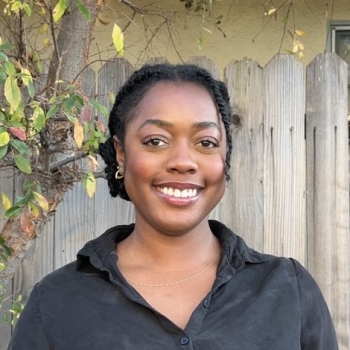
Humans of NHC: Meet Richard, Nurse, at the SFDPH Whole Person Integrated Care Team!
My name is Tia Halsey, and I’m the 2025-2026 National Health Corps SF member serving as the Shelter Health Public Health Educator with San Francisco Department Public Health’s Whole Person Integrated Care Team. Much of my work includes assisting with patient care coordination, taking patient vitals, and coordinating health education on topics including harm reduction, STI prevention, nutrition, etc. at clinics in homeless shelters and navigation centers throughout the city. I work closely with the nurses, providers, and health workers that run the clinics, and wanted to take the opportunity to speak with coworker and pillar of the Shelter Health team, Richard. Richard has been a nurse for 37 years and has worked for SFDPH for over two decades, so I was eager to hear his journey to the Shelter Health team, his perspective on providing care to under-served communities, and what continues to motivate him in this line of work.
Tia: Thank you for taking the time to talk with me today. Since you’ve been a bit of a mentor to me in the few times that we’ve worked together and I always learn a lot from you, I wanted to learn more about your background and your perspective on this job and what keeps you here. So, what initially brought you to nursing?
Richard: I want to thank you for saying I’m like a mentor figure. A lot of nursing is coaching, modeling behavior and education, I like to do that and be real. What brought me to nursing was actually being pre-med. I was applying to go to medical school, and my mother was about to lose her house; I did not feel good about going to medical school and continuing with interviews. Everything is about the family and how we go forward, so I decided to enroll into a nursing program, and I became an LVN first in New York. Even though I initially wanted to go to medical school, sometimes on the way to your dreams, you find other dreams, and it’s been the best thing for me ever.
T: So glad to hear it! Now, what brought you to Shelter Health specifically? Why did you feel that it was the right nursing job for you?
R: One of the things that I always kept inside me is [a strong sense of] justice. So when I was working at the time, I was running a department called Transitions (part of the Support from Hospital to Home for Elders study), about doing education at the patients’ bedside. I was getting involved with UCSF and worked with minority patients, vulnerable patients, and patients who are not perceived to be “good patients”; I wanted to represent them. The Super Bowl was happening in San Francisco (in 2016) for the first time here in a long time, and the mayor at the time was doing sweeps, sweeping all the people who were unhoused off the streets. And I witnessed one of these sweeps. I was appalled because there was not much humanity about it, it was just sweeping them up and then pushing them into shelters. I had a friend that told me “Hey, they’re actually looking for nurses in Shelter Health.” I decided to apply for the job because I wanted to make sure they were doing the right thing. Not only were they actually doing the right thing, they were doing things I didn’t realize that a nurse could do to help a person get back on the path of wellness. I was able to do something that I preached, even in my research, meeting patients where they are. I realized that’s when I can make the most change. I was able to see the environment that people were in, give them choices that made sense to them. In the shelter systems, I was able to get to know who they were, allow them to see a plan that fits for them, and work on it together.
T: It’s not an easy job, working in the shelters or as a nurse in general. Would you be willing to share one of the more challenging moments you remember on the job, or a memorable learning experience you had in those first couple of years?
R: I think the most memorable moment was actually the 4th or 5th year when the pandemic hit. I realized that poverty was not because of people, and I knew that back then too, that it was a social structure thing. When they were able to move 4000 people that were unhoused in two weeks into temporary housing, I knew it was policy, and that bothered me. Another thing that I learned was that housing may not be able to solve everything. It was really about addressing people in the space where they are, whether it’s because they have substance overuse disorder, mental health disorder, or even being kicked out of their home [for who they are]. It was really meeting people where they are and understanding that I was not [going to] fix the system, but I was going to allow them to ventilate what they were saying and mirror what they were doing.
A lot of what I’ve learned in nursing, in the hospital and outside the hospital, is in sitting with the patient and speaking with them, not at them. There are people from different walks of life [who] need something different from every nurse or practitioner that is sitting across from them. So many different things, but the most important is that they want to be seen and respected. But respect means different things to different people. I had to meet people where they're at when it came to what respect [to them] was, and that was a big learning curve because in the hospital, you get a doctor's order, you expedite it, you do it. When you're in the shelter system with them you don't want them to leave AMA (against medical advice), you want to build the therapeutic relationship up, so a lot of it was about learning how to respect people in the manner that they wanted to be respected. I had to learn to gain their respect without having the institution of the hospital behind me.
T: That makes sense. And you kind of already touched on my next question, but could you expand in any way upon how you build trust and rapport with the clients around such sensitive topics like PTSD and substance use? Do you have any advice in navigating those conversations?
R: Everybody has trauma, whether you're the patient or you're the provider. Because if somebody's having trauma, you're vicariously experiencing that. When I meet a patient, I tell them a little bit of who I am and then ask them about who they are. And I always feel like if I share a little bit about who I am, then it creates a safe space for them to talk about a little bit of who they are. It really is about creating a therapeutic alliance and allowing people to have the space to create that alliance. I can put the table there, I can put all of the things down like trust, humanity, integrity, but they're the ones that have to go to the buffet and take scoops from each of those things so they can feel comfortable. And you just give them the time, sometimes it happens immediately. I do have a psych background. I do have a big family, not my immediate family, but all my relatives. So, I was able to use those experiences to create a foundation to create an alliance. Now, where the therapeutic part comes in is about being able to speak to the medication, the disease entities, with the ability of having the knowledge, but being able to communicate it effectively. How you speak, how the message is being received, the mannerisms— it’s about listening to those little nonverbal cues that they give to you. And being able to be a student enough to practice your nursing, but also be able to realize that there's a human being across from you. And every human being is going to give you a message of how they want to be treated, so be attuned to how that is and how you practice.
T: Thank you for sharing that, those are good reminders to have. Now, do you have a favorite part about working in the shelter clinics or with the client population that we do or any aspect that you feel is the most rewarding?
R: Yeah, I think the most rewarding part is when I do see somebody get housing, or I see somebody who's now going to go through treatment or somebody who's coming back for wound care. And that may not mean a lot to a lot of people, but it shows me that at any point in life, people will make change. And so to me, that's the best part of it. Now, when somebody finally gets put into a home, and then I bump into them in the street and they're telling me, "Oh, I got my studio and all that," that's super rewarding. When I see that somebody has meaningful housing, whether they're off the street, they're in the shelter or a drop-in, or they're out of the shelter and into an SRO, to me, that makes me happy. If I see somebody out on the street and I know that they're not doing well, I know that San Francisco [DPH] is outreaching to that person. Almost every day is good. I've been working for so long in nursing. 23 years in DPH, but in healthcare, 37 years. And so sometimes it's hard to get to work. Waking up in the morning, I'm doing intermittent fasting, so I'm already waking up grouchy, you know? And I get on that bus, and I'm like, “Oh, I don't know if I can do this today” because sometimes it can be very heavy work. But once I get across that clinic door, sit down, and the first person comes in, it reminds me why I chose this profession. It’s the patients that give me the joy, you know? I think that that's the most important thing, the connection and the ability to see people meeting their own goals, not my goals that I put to them, they're meeting their own goals.
T: I love hearing that. Well, to close, are there any words of wisdom you have for aspiring nurses or healthcare workers that want to work with [under-resourced] groups and make a tangible impact?
R: My words of wisdom is that any experience you have in your personal life, if you can share it, will be beneficial to create a therapeutic alliance with your clients. The second one would be that in order to make change, you have to join committees. Yes, we're all overworked, but join the committees because sometimes that's where the decisions are made. And the third one is you have a voice, and your patients have their voice; you can instill different dialogues within your colleagues. When you feel like your patients are not being listened to, advocate for the patients. If you feel like certain segments of the population [are being ignored], the most vulnerable ones, you have the ability to advocate for them— even when you don't think you're being listened to, you are.
Nursing was the best thing that ever happened to me. It allowed me to understand the human body. It allowed me to also understand social, economic issues that can impact people's health. I use those tools not just for my patients, but I also use it for myself. And the thing about nursing is that I will tell the new nurses, you know, do outpatient, do inpatient, do med-surg, do psychiatry. But don't do it all for a long time. Keep on moving. The more well-rounded you are, the happier you are. And when you become burnt out, then you realize, well, maybe it's time to go back to pediatrics. And you can do that easily in nursing. But the most important thing is that when you do all of that, you have a broad spectrum of what wellness is. And it may be defined differently in those different departments and then you get to piece it all together. Keep on learning. Keep on learning.
About the Author